Culture is just like an enzyme—you know the biological
molecules that act as catalysts and help complex molecular reactions occur in
life. For some people, culture serves as the catalyst for the way in
which they act. This is true for the character Bigger Thomas in Richard
Wright's novel Native Son. In fact, Bigger's life exemplifies
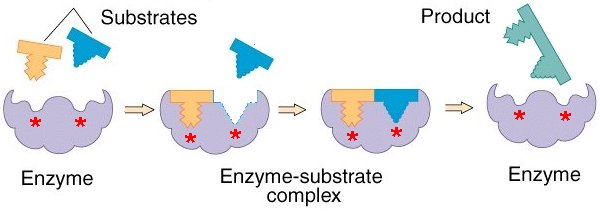
the enzyme-substrate complex. Bigger, as the substrate, binds to the
societal enzyme. If you know your science, you know that in any chemical
reaction a product is formed. In this case, the product is a "native
son"—an individual whose life is shaped by
his/her environment and is told since birth who he or she is supposed
to be.
Bigger's identity is hindered by his setting in a
racially divided culture. As a result of growing up in Chicago during the
1930s, he is exposed to racial oppression. The color of his skin deems him
inferior and strips him away from the same opportunities offered to whites.
Not only is Bigger a black man, but he is an impoverished one as well. His
family resides in a rat-infested apartment in the “black belt” of Chicago—the
area in which black citizens are confined to live. Such conditions lead him to fall into the violent, aggressive black man stereotype fabricated by
society. Flying airplanes, joining the military, and attending college are all
the things that he is taught only white people are capable of doing. This ideology lends him to his participation in petty crimes with his gang of friends. For this reason, his rape and murder of Mary Dalton and Bessie serve
as no surprise, since it was society that formulated the recipe for a criminal.
Without realizing it, Bigger's irrational behavior served as an obsequious bow
to the way society wanted him to be. Rather than being able to create an
identity of his own, society practically handed him a false one.

Sadly, Bigger ended his journey in the state of feedback
inhibition. Despite finally coming upon a new understanding of his life, the
end product of all his actions will be his death. He no longer has the chance
to start over in order to formulate his new sense of identity. In feedback
inhibition, the end product of a reaction deactivates the enzyme and
limits its activity. Although Bigger will face death, he can die knowing that he
will not blindly continue his life as part of society's formula for the
production of native sons. This realization in itself lends Bigger
Thomas to murmur the words "I'm alright now" at the novel's
close.


